The Purpose of this Website
This website is designed to advance our mission of mobilising trillions of dollars in support of the energy transition. It serves as a hub for deep, objective investment insights and as a meeting place for a community of investors who can both contribute their expertise and channel the capital needed to drive the energy transition
Our Community
True North Institute serves two primary audiences:
- Chief Investment Officers (CIOs) of the world’s capital owners — including sovereign wealth funds, pension plans, endowments, foundations, and family offices, both large and small.
- Investors driving the global energy transition — the specialist teams within those same institutions, as well as asset managers across public equities, venture capital, private equity, and infrastructure.
Featured Research
Here we feature a selection of the True North Institute's most important and influential research for both communities – Institutional CIOs and energy transition investors.
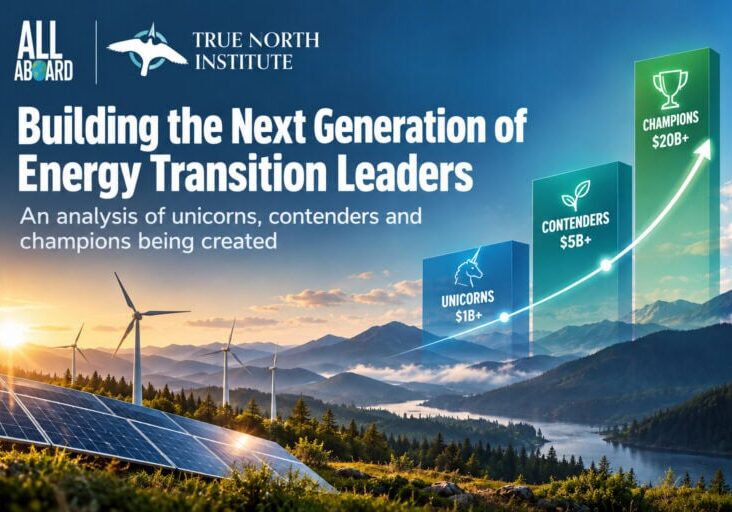
Building the Next Generation of Energy Transition Leaders
Is the climate tech VC ecosystem delivering the energy transition tech champions we need? We counted every climate-tech pure play, private or listed, worth $1B or more at the end of 2021 and again in September 2026. We sorted them into three tiers: unicorns (worth $1B or more), contenders (worth $5B or more) and champions…

Next-Generation Geothermal Energy Podcast
This condenses our 146 page whitepaper into an easy listening 25 minute podcast generated by Google Notebook, which captures the answers to our 11 questions asked in the paper. This is a great primer but can’t replicate the in-depth analysis shared in the paper.
Chart of the Month
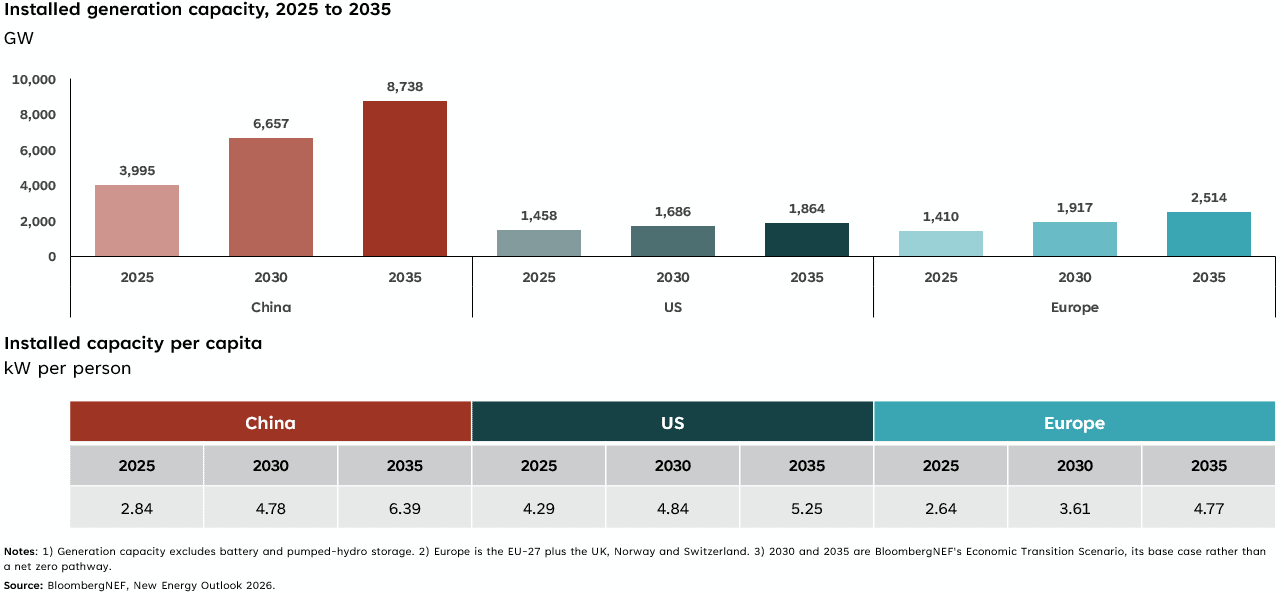
China is forecast to add 4,743 GW of generation capacity between 2025 and 2035. Its advantage is increasingly its build rate: it added ~9x more capacity than the US last year, is forecast to widen its installed-capacity lead from 2.7x to 4.7x, and overtake the US per capita by 2031, creating a growing structural advantage as AI drives power demand higher
TNI 2025 Year in Review
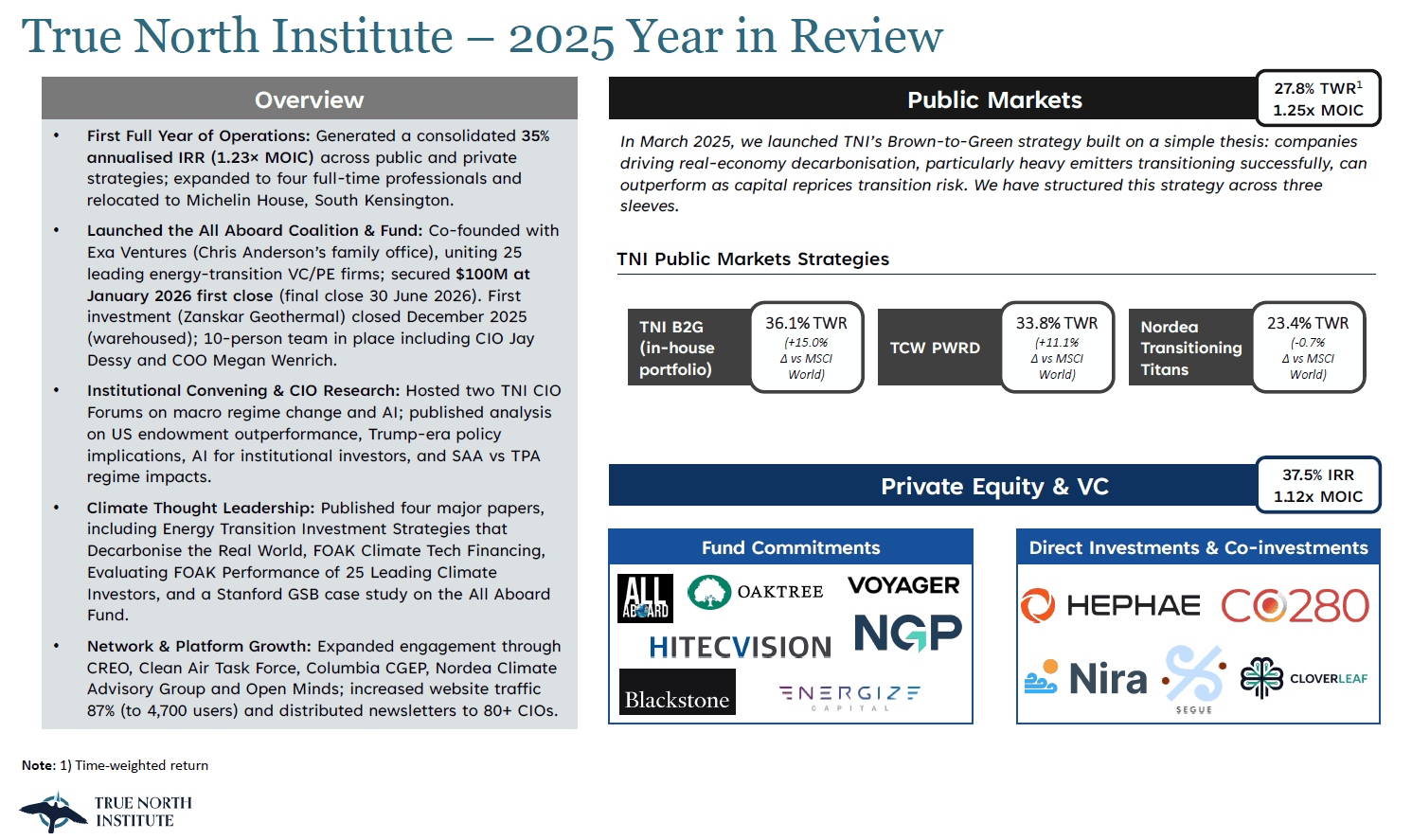
Proud to share the True North Institute 2025 Year in Review, our first full year of operations, marked by strong performance, platform growth and the launch of our flagship climate investment strategy, the All Aboard Fund.